 SoCal Garage Door Pros team
Every time your garage door opens and closes, the springs do the heavy work. The opener only guides the door; the springs balance a door that can weigh 150 to 300 pounds or more.
Because springs are made of tensioned steel, they fatigue with use and eventually break. Knowing roughly how long they last helps you plan a replacement instead of getting stuck with a door that won't open on a Monday morning.
How long do garage door springs last?
Most standard springs are rated for about 10,000 cycles. For a typical household, that works out to roughly 7 to 10 years. Busy homes that use the garage as the front door can wear through them in 4 or 5.
What counts as a cycle
One cycle is one full open and one full close. If you leave in the morning and come home in the evening, that's two cycles a day. Add a school run, a trip to the store and kids grabbing bikes, and it climbs fast.
Cycles to years at a glance
| Cycles per day | Rough lifespan of a 10,000-cycle spring |
|---|---|
| 2 | About 13 years |
| 4 | About 7 years |
| 6 | About 4½ years |
| 8 | About 3½ years |
These are estimates. Climate, door weight and maintenance all move the number up or down.
Torsion vs. extension springs
Most doors in the Valley and across LA County use one of two spring systems. Both wear out on a similar cycle rating, but they fail differently.
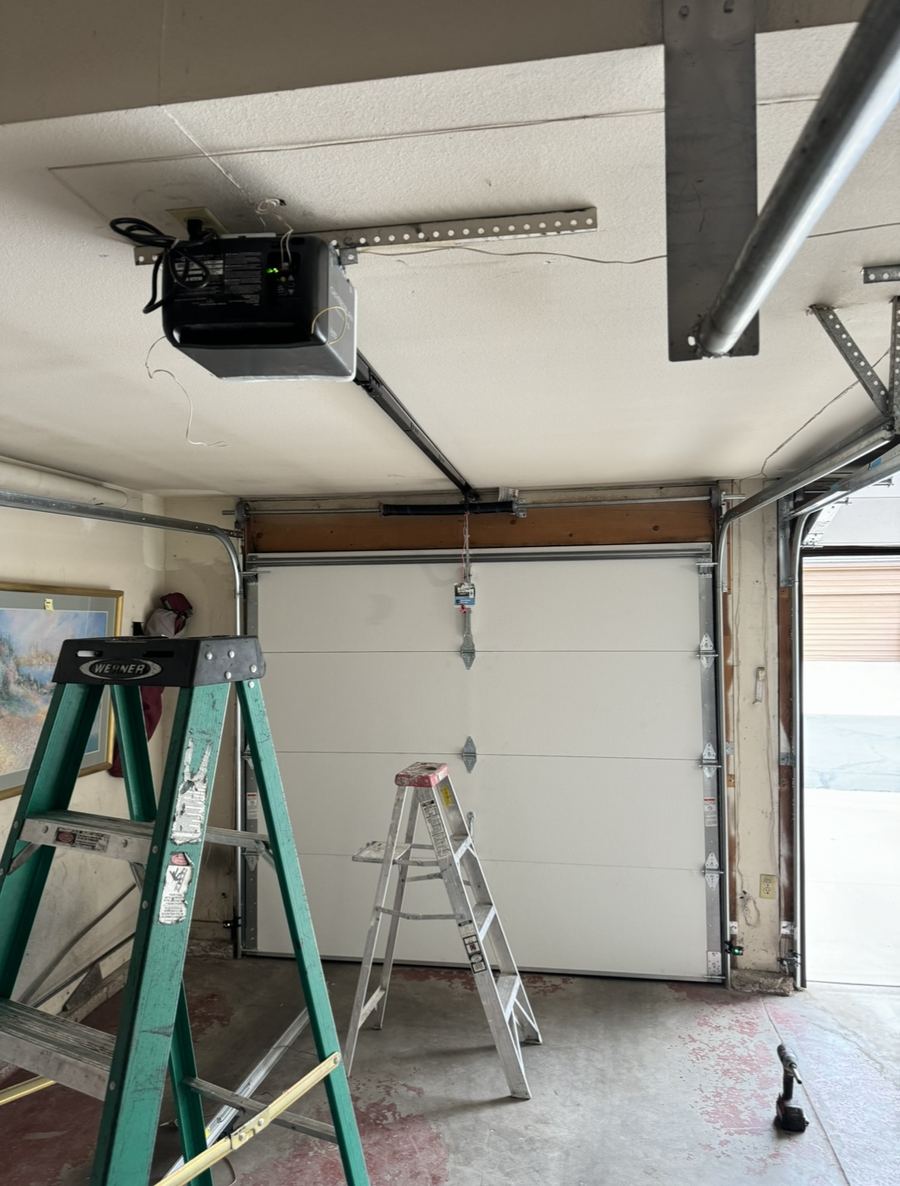
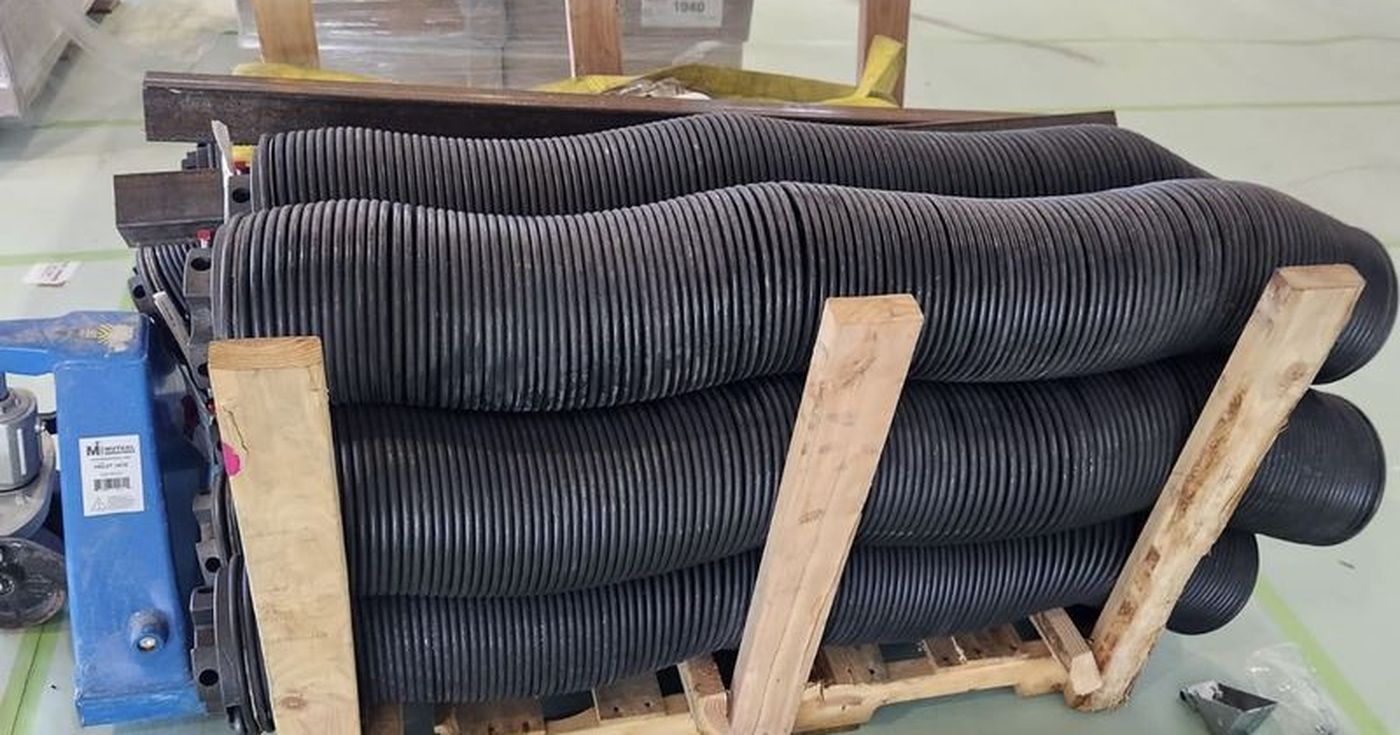
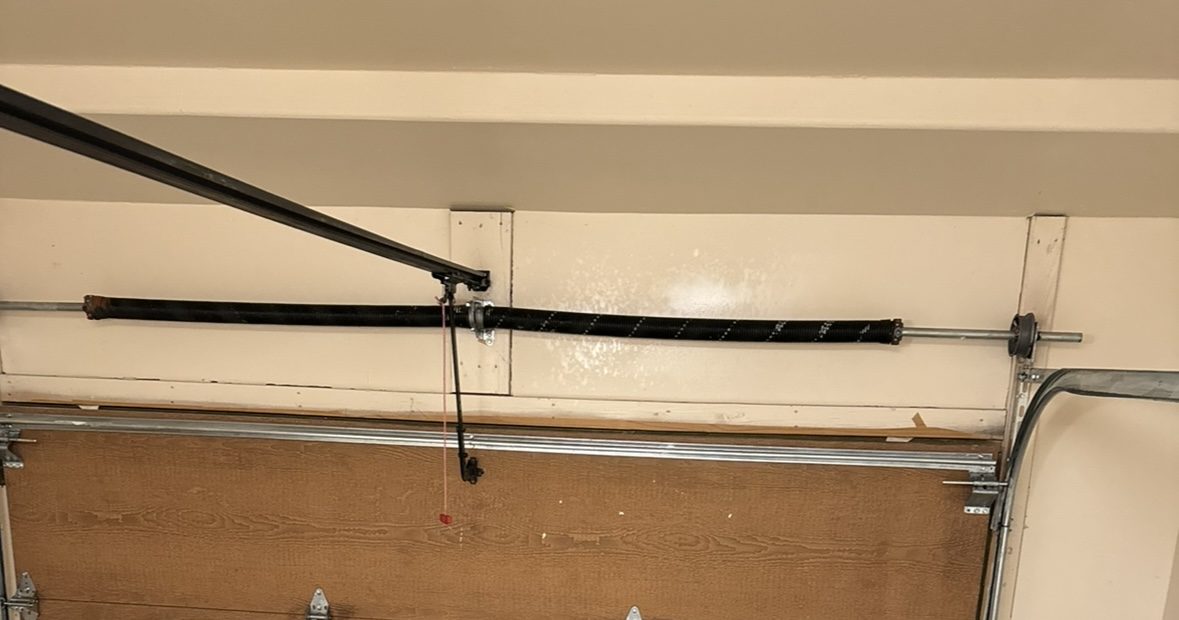
- Torsion springs mount on a metal bar above the door and twist to store energy. They're smoother, safer and usually last longer.
- Extension springs run along the horizontal tracks on each side and stretch as the door closes. They're common on older homes and should always have safety cables running through them.
What shortens spring life
- Heavy daily use. More cycles means an earlier replacement.
- Rust. Coastal air near the Westside and South Bay speeds up corrosion on bare springs.
- A door that's out of balance. When one spring is doing more work, it wears faster.
- No lubrication. Dry coils create friction that eats into the spring's life.
- The wrong size spring. A spring that's undersized for the door's weight fatigues quickly.
5 signs your spring is close to breaking
- A visible gap in the coils of a torsion spring. That usually means it has already snapped.
- The door feels very heavy when you lift it by hand with the opener disconnected.
- The opener strains, slows down or stops partway up.
- The door sits crooked or one side rises before the other.
- A loud bang from the garage, like a gunshot, when nobody was using the door.
What to do if a spring breaks
A door with a broken spring is carrying its full weight on the opener and cables. Don't keep pressing the remote, and don't try to lift it by hand.
- Keep people, pets and cars out of the door's path.
- Leave the door where it is. If it's open, don't close it.
- Unplug the opener so nobody triggers it by accident.
- Call a technician to replace the spring and check the cables.
Springs are under enough tension to cause serious injury, which is why spring replacement is a job for a trained technician with the right winding bars. See our garage door spring repair service for how we handle it.
How to make new springs last longer
- Ask about high-cycle springs. They're rated for 20,000 cycles or more and are worth it for busy households.
- Replace springs in pairs. If one broke, the other has done the same amount of work.
- Book a yearly tune-up so the door stays balanced and the springs get lubricated.
- Watch for early signs and fix small issues before they turn into a stuck door.
Need it fixed?
Garage Door Spring Repair across the Valley and LA County
Upfront pricing, a 5.0-star rating and technicians based in Encino, Westchester and Lakewood.
Frequently asked questions
Can I replace a garage door spring myself?
We don't recommend it. Springs store a lot of energy, and a slip with the wrong tool can cause serious injury. A technician has the winding bars and experience to do it safely.
Should both springs be replaced at the same time?
Yes, in most cases. Both springs have done the same number of cycles, so when one breaks the other is usually close behind.
Can I open my garage door with a broken spring?
It's not safe. The door is much heavier than it feels with working springs, and forcing it can damage the opener or cause the door to fall.
How long does spring replacement take?
Most spring replacements take about an hour, including a balance check and safety inspection.