 SoCal Garage Door Pros team
Rollers guide the door along its tracks every time it opens and closes. When they wear out, the door gets noisy, shaky and harder on the opener.
If you're replacing them, the type you choose makes a real difference.
Nylon vs. steel at a glance
| Nylon (sealed bearing) | Steel | |
|---|---|---|
| Noise | Much quieter | Louder |
| Maintenance | Little lubrication needed | Needs regular lubrication |
| Rust | Wheels don't rust | Can rust, especially near the coast |
| Best for | Most homes, garages under bedrooms | Budget or heavy-use builder doors |
Signs your rollers need replacing
- Grinding, squeaking or scraping as the door moves.
- The door shakes or jerks.
- Chipped, cracked or wobbly wheels.
- Rollers that don't spin freely.
- Rust on steel rollers.
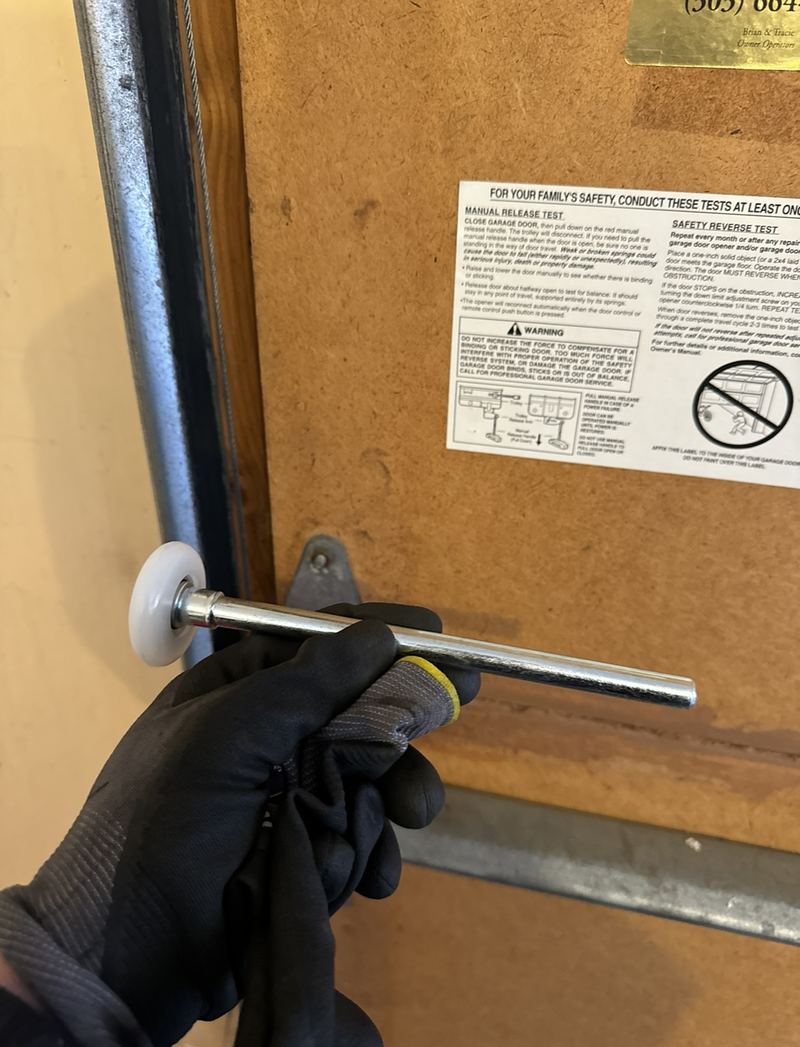
Replace the whole set
Rollers wear at the same rate, so we replace the full set rather than one or two. While we're there we check the tracks and hinges, since the hinges hold the roller stems.
The bottom rollers sit in brackets connected to the lift cables and springs. Removing them can release that tension suddenly.
See our roller replacement service.
Need it fixed?
Garage Door Roller Replacement across the Valley and LA County
Upfront pricing, a 5.0-star rating and technicians based in Encino, Westchester and Lakewood.
Frequently asked questions
How long do garage door rollers last?
Basic rollers often last around 5 to 7 years. Quality nylon rollers with sealed bearings can last much longer.
Will nylon rollers make my garage door quieter?
In most cases, yes. It's one of the most effective upgrades for a noisy door.
Do nylon rollers need lubrication?
The wheels don't, but a little lubricant on the bearings and stems helps.